Shenzhen Hard Precision Ceramic Co., Ltd.

지르코니아 세라믹의 경도는 얼마이며, 지르코니아 세라믹 부품의 경도는 높은 편인가요, 낮은 편인가요?

  1. / 뉴스 / 지르코니아 세라믹의 경도는 얼마이며, 지르코니아 세라믹 부품의 경도는 높은 편인가요, 낮은 편인가요?

지르코니아 세라믹의 경도는 얼마이며, 지르코니아 세라믹 부품의 경도는 높은 편인가요, 낮은 편인가요?

지르코니아 세라믹스 possess exceptional hardness; hardness test reports for zirconia used in cutting tools indicate a rating greater than 9. The claim that it is second only to diamond is accurate, given that diamond is defined as having a hardness of 10. In contrast, quartz has a hardness of around 7, which is lower than that of zirconia.

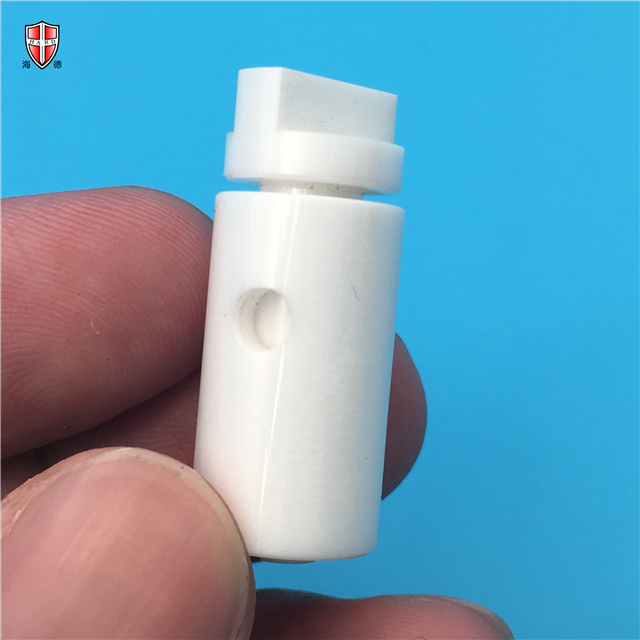
As living standards rise, so do expectations regarding the quality of everyday items, leading to the growing popularity of zirconia ceramic components. These components offer numerous advantages, including high toughness, high flexural strength, superior wear resistance, excellent thermal insulation, and a coefficient of thermal expansion similar to that of steel. Products made from zirconia ceramics are both safe and environmentally friendly—but do you know exactly how hard zirconia ceramic components are?

ceramic machining
지르코니아 세라믹의 경도는 얼마이며, 지르코니아 세라믹 부품의 경도는 높은 편인가요, 낮은 편인가요?

Pure zirconia has a molecular weight of 123.22, a theoretical density of 5.89 g/cm³, and a melting point of 2715°C. It typically contains small amounts of hafnium oxide; while this is difficult to separate, it has no significant impact on the performance of zirconia ceramic components. Zirconia exists in three crystalline forms: monoclinic, tetragonal, and cubic phases. At room temperature, zirconia exists solely in the monoclinic phase; it transforms into the tetragonal phase upon heating to approximately 1100°C and converts to the cubic phase at even higher temperatures.

Zirconia ceramic components are characterized by high strength, wear resistance, and resistance to oxidation, rust, acids, and alkalis; they are also antistatic, making them ideal, high-tech, and eco-friendly components in today’s market. Zirconia ceramics have already been successfully utilized in heating elements and associated equipment operating in oxidizing atmospheres at temperatures exceeding 2000°C, and active research is currently underway regarding their use as electrode materials for magnetohydrodynamic (MHD) power generation.